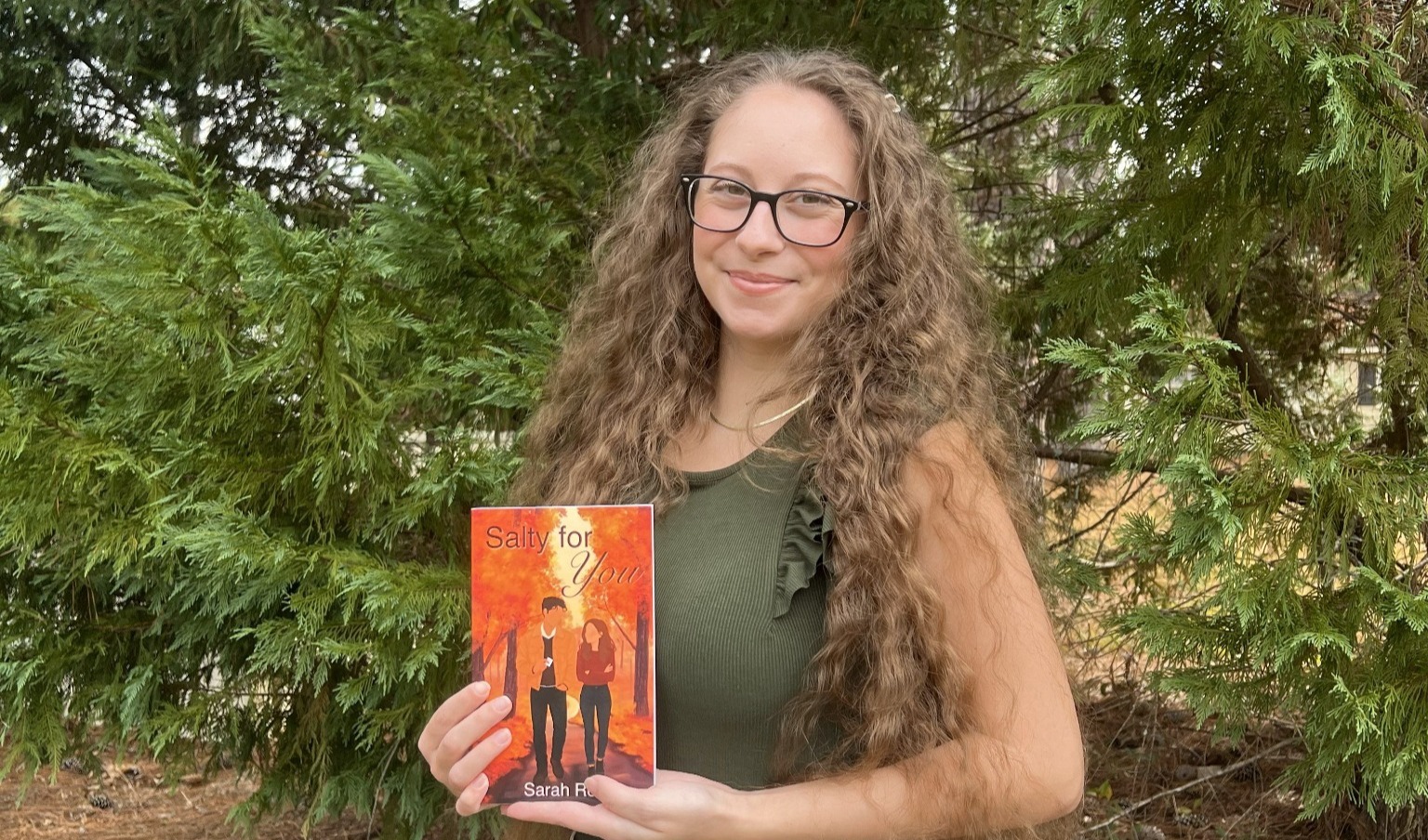
Sarah Reid: Choosing Creation Over Limitation
Sarah Reid has been writing stories for as long as she can remember.
“I was five or six years old when I started writing little books,” she says. “Even in elementary school, I was always making up stories. It’s something I’ve always loved.”
Now 21 and living in South Georgia, Sarah is finally pursuing that lifelong passion on a larger scale—publishing books, growing a readership, and building a writing career—while navigating life with POTS (Postural Orthostatic Tachycardia Syndrome) and ME/CFS (myalgic encephalomyelitis/chronic fatigue syndrome).
Her journey hasn’t followed a traditional path. But it has been shaped by resilience, creativity, and a deep belief that meaningful stories can be written—even from bed.
Sarah’s health challenges began in childhood, with symptoms intensifying around age 13. Years of fatigue, brain fog, and physical limitations eventually led her and her family on a long search for answers. Just before her 18th birthday, Sarah received a POTS diagnosis at the Mayo Clinic in Minnesota.
In addition to POTS, Sarah lives with ME/CFS, a condition that causes profound fatigue and can be triggered by both physical and mental exertion. For her, even thinking deeply—planning, concentrating, creating—can worsen symptoms.
“Writing can trigger my ME/CFS,” she explains. “It can cause chronic fatigue and pain, so I have to be really intentional about how and when I write.”
Most of Sarah’s writing happens from bed. Her head and neck are carefully supported. Her iPad rests in her hands. She writes in short stretches, often between naps.
“I’ll usually nap, write, and then sometimes I have to nap again,” she says. “I just try to go with the flow.”
She keeps notes and documents open at all times, capturing ideas whenever inspiration strikes so that when her energy allows, she can bring those ideas to life.
“I don’t write as often as I would like,” she says. “But I write as much as I can.”
That persistence has led Sarah to publish two books—each reflecting her creativity, values, and commitment to normalizing disability and chronic illness through storytelling.
Her first book, Leo and Charlotte: True Heroes, is a children’s chapter book inspired by her nephew. The story follows Leo, a boy who is afraid of almost everything, and his three best friends who help him navigate life, stand up to a school bully, and discover what bravery really looks like.
The book blends humor and warmth with meaningful life lessons—kindness toward elderly neighbors, strong family relationships, and the understanding that courage doesn’t require superpowers.
“You don’t have to feel like a superhero to be brave,” Sarah says. “You can make a big impact at any age just by being a good person.”
One of the characters, Charlotte, uses arm crutches. While the book isn’t about disability, that detail is intentionally included.
“I want disabilities to feel normal in stories,” Sarah explains. “Not something heavy or different—just part of life.”
Sarah’s second book, Salty for You, is a clean romantic comedy with a rare and refreshing perspective: the main character has POTS.
The story centers on a shy, routine-loving young woman whose carefully ordered world is disrupted by a charming—but initially annoying—new guy. Friendship grows into romance, all while chronic illness remains part of the narrative.
“It’s very wholesome and very cute,” Sarah says. “There’s humor, there’s sweetness, and there’s still representation.”
For Sarah, representation isn’t about making illness the focus—it’s about letting people see themselves in stories where love, joy, and growth still exist.
“Anyone can read it,” she says. “But if you live with chronic illness, you finally get to see yourself in a love story.”
Sarah doesn’t limit herself to one genre—and she doesn’t plan to.
She is currently working on two additional books at the same time, often switching between them when creative energy runs low.
“One of them will include four chronic illness representations,” she says. “POTS and ME/CFS, which I personally have, as well as FND and EDS.”
Her goal is to bring awareness to invisible illnesses without making the story feel heavy or overwhelming.
The second project is a fantasy novel with a more open-ended approach to chronic illness.
“I wanted readers to be able to see themselves in the main character, whatever their illness might be,” she explains. “It won’t be sad—it’ll still be exciting and imaginative.”
One book is already halfway finished. The other is in early stages, with world-building underway.
Sarah’s books are available on Amazon, where readers can find Leo and Charlotte: True Heroes and Salty for You by searching her name, Sarah Reid.
Despite limited publicity, sales have been encouraging.
“I sold about 21 copies this month,” she says. “That was really exciting, especially since it was just published.”
She has also participated in vendor events, carefully resting beforehand so she can attend. At one recent event, she sold books and even signed copies for readers.
“That was a really big moment for me,” she says.
Writing isn’t just a hobby—it’s a calling.
“Oh, 100%,” Sarah says when asked if she wants to make it a career. “If I had the energy, I would write all the time.”
Living with POTS and ME/CFS means Sarah must constantly balance rest and creativity. Physical or mental overexertion can lead to increased heart rate, extreme fatigue, or even temporary loss of mobility.
“I take one to three naps a day,” she says. “Even with a lot of sleep, I can still be exhausted.”
Still, she continues to create. Through her writing, her podcast BE POTSitive, and her presence online, Sarah is building a meaningful, purpose-driven life—one that works with her body instead of against it.
Her story is a reminder that productivity doesn’t have to look traditional to be powerful, and that stories—written slowly, carefully, and sometimes from bed—can still travel far beyond the room where they are created.
Post a comment